 Book Reviews: February 2012

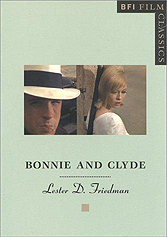
The movie poster boldly declared: “They’re young…they’re in love…and they kill people.” Ladies and gentlemen, Bonnie and Clyde. Released forty-five years ago, it stands as one of the revolutionary pictures of the Sixties. As film scholars know, Bonnie and Clyde, a stylish, “adroit mixture of comedy and carnage,” helped usher in the Age of the New American Cinema (roughly 1967-1980), a time of such brilliant, groundbreaking movies as The Graduate (1967), Easy Rider (1969), Midnight Cowboy (1969), Five Easy Pieces (1970), The Last Picture Show (1971), The Conversation (1974), and Taxi Driver (1976). In Bonnie and Clyde (London: British Film Institute Publishing, ISBN: 0-85170-570-7), Lester D. Friedman, professor of Media and Society at Hobart and William Smith Colleges, trenchantly discusses the movie and its significance. Dr. Friedman divides his study into three main segments: The Creators, The Cultural Phenomenon, and Film Analysis. In the book’s initial section, Friedman examines the contributions of screenwriters (and Esquire magazine employees) David Newman and Robert Benton, producer and star Warren Beatty, director Arthur Penn, editor Dede Allen, and consultant Robert Towne, who helped hone the script. Professor Friedman contends that, far more than anyone, Beatty was responsible for the picture’s success. “While his role as actor is clearly crucial to the success of Bonnie and Clyde,” Friedman asserts, “Beatty’s function as producer, particularly his interaction with Warner Bros. before and after production, is even more important. In fact, it is no exaggeration to state that without his persistent cajoling to get studio approval for the picture, his willingness to risk his professional reputation and personal finances to get the film made, and his post-production insistence on re-releasing the movie after a disastrous initial run, Bonnie and Clyde would probably never have escaped its resting place in Newman’s and Benton’s desk drawers.” Friedman also paints an incisive picture of the gifted director, Arthur Penn, an “East Coast intellectual…who felt instinctually closer to theatre than to film.” In addition to his many Broadway triumphs, Penn helmed such movies as The Left Handed Gun (1958), The Miracle Worker (1962), Alice’s Restaurant (1969), Little Big Man (1970), Night Moves (1975), and The Missouri Breaks (1976). Exceptionally controversial, Bonnie and Clyde polarized the public. Studio boss Jack Warner despised the ultraviolent, sexually candid film and “ordered it buried.” Such critics as Page Cook (Films in Review), Charles Samuels (The Hudson Review), Richard Gilman (New Republic), and Bosley Crowther (New York Times) also loathed the movie. The latter reviewer, especially, abhorred the picture. Professor Friedman points out that Crowther “was deeply outraged by Bonnie and Clyde, writing three fulminating reviews vividly expressing his personal and professional disgust.” For some critics, then, the film “symbolized the attack of the barbarians at the gates of American life; they saw it as a savage work of insurgent renegades designed to sap the moral strength of modern society by destroying the values that guided and sustained past generations.” Not every commentator who saw it, however, agreed. Advocates of the movie included Andrew Sarris (The Village Voice), Judith Crist (Vogue), and Pauline Kael, whose vigorous 9,000-word defense appeared in The New Yorker. According to Dr. Friedman, “reactions to Bonnie and Clyde played a pivotal role in changing the national face of film criticism, proving that American movies could attain the same exalted status as European art films, allowing auteurism a foothold into intellectual discussions, and demonstrating that American writing about film had finally come of age.” Bonnie and Clyde should not have worked. Consider, Friedman argues, “how many Hollywood studio commandments” the picture broke: “scripting by two New York magazine writers with no film experience; directing by an East Coast intellectual whose main successes came on Broadway; producing by an uppity actor who sought to control his own destiny; starring an unknown female lead [Faye Dunaway] with a supporting cast who looked like regular people [Michael J. Pollard, Gene Hackman, Estelle Parsons]; focusing on murderous bank robbers; dealing overtly with female sexuality and male impotence; incorporating technical elements drawn from European cinema; integrating brutality with humor; subverting the values of a traditional genre; ending with the most violent sequence ever committed to celluloid.” Yet the picture succeeded on a grand scale. Viewers, especially the young, flocked to the cinemas, turning the picture into a “money-making machine.” Moreover, the film garnered ten Academy Award nominations. Parsons (for her role as Blanche Barrow) and director of photography Burnett Guffey won Oscars. Professor Friedman, who does a superb job of contextualizing the film, addresses several major topics, including the depiction of violence, the liberalization of moral standards, Sixties youth culture (after all, “in the age of Abbie Hoffman, it was cool to be an outlaw”), and the movie’s influence on fashion. The “Bonnie Parker look…chic and powerful, professional and sophisticated,” assembled by the film’s costume designer, Theadora Van Runkle, became immensely popular. “The costumes in Bonnie and Clyde,” Friedman observes, “particularly those worn by Faye Dunaway, had a sweeping impact on the American fashion scene. They presented a distinctive look which, while harkening back to an earlier age of screen heroines, simultaneously rejected the notions of 50s female passivity and allowed contemporary women to display their growing power and emerging confidence.” Dr. Friedman includes a number of fascinating nuggets in his text. For example, before the film passed to director Penn, both Jean-Luc Godard and Francois Truffaut declined the project. However, the latter “provided Newman and Benton with a series of crucial visual and dramatic ideas that found their way into the final script.” Friedman also notes that Penn “was highly influenced by the great Japanese director, Akira Kurosawa” when it came time to film the shocking final scene where the two desperadoes are shot to pieces by Frank Hamer’s posse. (Even after all these years, Friedman avers, “the death of Bonnie and Clyde remains one of the most powerful moments in American cinema history.”) And who knew that Bob Dylan was once considered for the role of the “stunted Clyde”?
Friedman, whose other studies include American Cinema of the 1970s (Rutgers University Press) and Citizen Spielberg (University of Illinois Press), has produced a clearly written, impressively researched book. In addition to personally interviewing Arthur Penn, he consulted such works as Frank Beaver’s Bosley Crowther: Social Critic of Film, 1940-67 (Arno Press), Peter Biskind’s Easy Riders, Raging Bulls: How the Sex-Drugs-and-Rock’ n ’Roll Generation Saved Hollywood (Simon and Schuster), and Radical Visions: American Film Renaissance, 1967-1976 (Greenwood Press) by Glenn Man. Professor Friedman’s Bonnie and Clyde belongs to the estimable BFI Film Classics Series, a collection of small, yet insightful, volumes, including Laura Mulvey’s Citizen Kane, Phillip Drummond’s High Noon, Camille Paglia’s The Birds, and Michael Eaton’s Chinatown.
|
 "Bonnie and Clyde"