|
By Ronnie
Joe Adamson was the first person that I secured an interview with. At first there was a little hesitation on his part as he said, "The less said about this film the better. I have much better film projects in my past I'll be happy to talk to you or anybody else about".
In my follow up response, I told him that I was sincere in trying to research the film and he relented saying, "I didn't mean that wiseass comment in any serious way. I'm a film historian, and every film I worked on is important to me as a document in the understanding of how films are made".
Over the months I was slowly able to secure more and more interviews, with each person filling in a little piece of the puzzle. I came about some information by chance, like when I interviewed Tony Bramwell about his new Beatles book. Come to find out he did promotional work for the film!
The following is the complete interview transcripts regarding ALL THIS AND WORLD WARR II, in the order that the interviews were conducted…
E.C.: What can you tell me about the film? Joe Adamson: This picture was engineered by Martin Machat of Twentieth Century Records and Lou Reizner (who engineered the remake TOMMY LP with alternate artists) as an LP, with the film itself as an ancillary project to help promote the LP (the same way that HARD DAY'S NIGHT got off the ground). Alan Ladd Jr. (then running Twentieth Century-Fox) agreed to do the film if Sandy Lieberson (who had produced BROTHER CAN YOU SPARE A DIME?) would act as producer
(more or less meaning line producer, in charge of actually getting the film made). My friend Michael Barlow had been LA researcher on BROTHER and turned down the corollary position on this project just before I asked him if he knew of any good jobs in town, so I was recommended and got the job of plowing through all of Fox's WWII films looking for relevant footage. Sandy Lieberson was in London producing other pictures while I was doing this in 1975.
The first cut of the film was prepared in London by Tony Palmer, with me and NY researcher Susan Winslow (who had filled this post on BROTHER also) by his side, helping him argue with Machat and Reizner's concept of the film, which we thought was idiotic. Palmer's first cut didn't use much of the re-recorded Beatles songs, in some cases using only instrumental (pre-vocal) versions the producers had made the mistake of making available to him. Lou Riezner told me during one of our arguments that their initial concept of the film may have been idiotic, but it was in fact what Fox had bought. The big problem turned out to be that no one was in love with Palmer's cut, not even those of us who took his side - though it did have a couple of good sequences, including a smashing London Blitz sequence cut to the BeeGee's version of "Golden Slumbers" (making liberal use of footage I had found in a Fox film called CONFIRM OR DENY).
I was dismissed from the film once this cut was completed, though I still had post-production duties back in LA. Susan Winslow was promoted to Director and (along with editors Colin Higgins and Joe Illing) and spent the summer preparing a version more in keeping with the original idiotic conception, but keeping some fragments, including the "Golden Slumbers" sequence, intact. Tony Palmer received Creative Consultant credit on the final film.
One of the trades said the end result was "like playing kazoo at Beethoven's funeral." I still say the less said about this film the better. E.C.: Do you have any idea about the inspiration for the film? I had read that it was based on a dream that Russ Regan had. What immediately comes to mind was David Bowie's statement (in a 1975 interview) in which he said, "Hitler was the first rock star". Joe Adamson: I wasn't there at the inception of the project, I'm not even sure who Russ Regan was - I think a Fox exec attached to the project, possibly the one who sold it to Alan Ladd Jr. after Machat & Reizner had sold it to him. I don't remember ever meeting him, though I do remember him being involved. I suppose it's possible that he had such a feverish dream, but I would go by what Tony Palmer told me: It was a follow-up to the TOMMY success, probably based first on SGT. PEPPER and expanding outward from there - This is more plausible than the hype Russ Regan came up with to sell the movie (and I do remember that). The ideas that "Here Comes the Sun" should accompany the Japanese dawn raid on Pearl Harbor, and "Fool on the Hill" should be heard under shots of Hitler at his palace at Berchtesgaden, were apparently in place early on. Ken Russell's LISZTOMANIA came out while I was taking notes on Fox War films, so ideas such as David Bowie's were floating about, but I don't think were particularly relevant in the early thinking on this project. E.C.: Who was in charge of acquiring the artists to cover the Beatles songs? Were the artist given a full description of the concept of the film? Joe Adamson: I was not involved in any of this. I would presume this was Machat's role. Sandy Lieberson told me very simply that Fox's concept was to cut WWII footage to Beatles songs. This is probably what all of us were told. If any "selling" was done to get the musicians involved, it was probably done to their agents/managers. Lieberson told me from the beginning that he hoped to convince the studio to phase the Beatles out altogether and make a good pop culture story of WWII, but things developed otherwise. E.C.: I also read that Terry Gilliam rejected the idea of making a series of animations for the film. Was it originally going to be a combination of animation and newsreels? Joe Adamson: The rush of people away from this project was pretty stunning, starting with Philippe Mora, who directed BROTHER CAN YOU SPARE A DIME, and including Michael Barlow, prompting my entry. At one time the National Lampoon people were going to be involved, allowing me to meet Christopher Guest and Bill Murray (along with Murray's half-brother Brian Doyle-Murray) before they were famous. We ran footage for them and they had some pretty funny ideas, but nothing came of this. Seems to me I heard something about the possibility of Terry Gilliam's involvement, but I didn't think much about it - The film could have used a humorist's touch, and the idea that it would be some kind of wild and crazy romp (or would be taken that way) must have prompted the green light. Even I could have contributed something to this, but I was working for Lieberson, whose thinking was in a totally different direction. Of course, this kind of thing has to be handled just right
(a la THE PRODUCERS) or would end up even worse taste than the final film actually was (if such a thing is possible). In fact, I think the idea of incorporating footage from studio War films was in the mix from the beginning, and with Machat being with Twentieth Century Records, Twentieth Century-Fox was the logical choice. Also given the mileage (and footage) they've gotten from WWII over the years - Had Gilliam been involved, his work would've just been intercut with everything else.
Incidentally, in the couple of years after the film came out, Machat was fired from
Twentieth Century Records and Lou Reizner was dead.
JOE ADAMSON BIO:
E.C.: Did you have any input into the inspiration of the film? Tony Palmer: The idea for the film was brought to me by an American producer called Sandy Lieberson. I was responsible for choosing which songs to use, and which images to put with each song. I did not choose who 're-arranged' or who sang the re-arrangements of each song. E.C.: I had read that it was based on a dream that Russ Regan had... Tony Palmer: Who is he? E.C.: One of the few websites with information about ALL THIS AND WORLD WAR II lists the “crew” that worked on the film. Also, Susan Winslow was listed as “director”. Tony Palmer: Regan I've never heard of. Winslow rings a bell. I think she might have been a girl friend of someone. But she certainly wasn't involved in the editing. E.C.: What immediately comes to mind was David Bowie's statement (in a 1975 interview) in which he said, "Hitler was the first rock star". Tony Palmer: Nice guy, David, but sometimes full of shit. E.C.: You are listed as "researcher" on an Internet site, which mentions ALL THIS AND WORLD WAR II. What was your role in the film, i.e. what did the 'researcher' do? Tony Palmer: I was the editor, and effectively the director. E.C.: Who was in charge of acquiring the artists to cover the Beatles songs? Tony Palmer: Lieberson. E.C.: Were the artist given a full description of the concept of the film? Tony Palmer: Don't know, but Lennon certainly was because I discussed most of the sequences with him at length. Lennon got involved because he was a friend. E.C.: Terry Gilliam rejected the idea of making a series of animations for the film. Was "All This" originally going to be a combination of animation and newsreels? Tony Palmer: No. Not as far as I know. E.C.: Do you think the film will ever see a legitimate release? Tony Palmer: I've never understood why not. E.C.: Or would it be a legal headache with getting the performance rights (again) for the music and films used? Tony Palmer: Possibly now. The Beatles' estate is: a) very greedy and b) very possessive.
TONY PALMER BIO:
E.C.: First I want to ask you about something that is printed on the booklet that comes along with the soundtrack for "All This and World War II". It says, "Based on a dream by Russ Regan." What exactly was this dream? What immediately comes to mind was David Bowie's 1975 statement, in which he stated, "Hitler was the first rock star". Does this "dream" mean that you came up with the basic concept for the movie? Russ Regan: Yes. The movie is self-explanatory. The music that was used for the different segments explains what the dream was. For example, the Japanese planes taking off for Pearl Harbor and the Bee Gees singing ‘Here Comes the Sun.’
“The rest is all basically self-explanatory. Seeing that I was a kid during World War II and I saw all these newsreels and stuff, you know, it seemed like the music sort of fit a lot of the segments of that war, so that’s why I did it. And I dreamt it, actually wrote it all down. I woke up in the middle of the night, wrote these different things down, and we made a sort of a documentary movie about World War II with the Beatles’ music, so that’s what it is, my friend. E.C.: When I interviewed Joe Adamson, he seemed to imply that the soundtrack came first and the film was something to just promote it. Is this true? Who picked the Lennon/McCartney songs that were used and who decided the artists that would cover them? With Elton John and Tina Turner, the first thing that comes to mind is the movie version of "Tommy." Is this how these two artists were picked? Russ Regan: The soundtrack was recorded for the movie. The songs were picked by Russ Regan and Lou Reizner. “Tommy” had nothing to do with it. E.C.: There seemed to have been a lot of people that worked on this film. I recently interviewed Tony Palmer and he didn't know who you were! Also, he says that he was "effectively the director". Who exactly worked on this film and in what capacities? Also, the name of Sandy Lieberson, Martin Machat and Lou Reizner comes up. What were their roles in the film? Russ Regan: Tony Palmer was not a very nice man, I'm glad he didn't remember me! Sandy Lieberson was executive in charge of production in England; Martin Machat was co-producer; Lou Reizner produced the soundtrack. E.C.: That must have been some sales pitch to 20th Century Fox to do this movie. Who actually convinced them to back this film? Was the initial concept different from the final product? Russ Regan: I wanted to do this movie. I was president of 20th Century Records, and they said ‘okay’. The original concept stayed the same. E.C.: Tony Palmer mentioned that John Lennon had some input (but he didn't elaborate). Do you know what Lennon contributed? Russ Regan: John Lennon said he liked the movie! E.C.: The first cut of the film was prepared in London by Tony Palmer (who received Creative Consultant credit on the final film). How different was this from the final version? Russ Regan: It was very different! E.C.: I read that Terry Gilliam (of Monty Python) rejected the idea of making a series of animations for the film. Do you know the story here? Russ Regan: Terry Gilliam was never asked. E.C.: How far into its run was the film yanked from release? Russ Regan: Two weeks! E.C.: Do you know who ultimately made the decision to pull the film? Russ Regan: I don't remember. E.C.: My feeling is that if it hadn't been released by 20th Century Fox, but by another smaller film company, the film would have been considered an "art" film. Do you think the backing of such a big company actually hurt the chances for the film? Russ Regan: Yes! Yes! Yes! E.C.: Do you think the film will ever see a legitimate release? (My DVD copy is of course a bootleg copy) Russ Regan: It should, it's a small classic! E.C.: At the end of the film, there is a cover of "Give Peace a Chance". The appearance of this song at the end of the film seems to almost give it an "ending", i.e. showing the futility of war, with the real message being give peace a chance! What artist performed this version and why didn't it appear on the soundtrack? Russ Regan: It didn't appear on the soundtrack, because it was an afterthought.
RUSS REGAN BIO:
E.C.: What can you tell me about the film, ALL THIS AND WORLD WAR II… Tony Bramwell: Oh, Lou Reizner’s film…the music was so wonderful…and the movie was dreadful! (laughs) Brian Ferry's track and Peter Gabriel's track -they're just magnificent pieces which haven't seen the light of day. E.C.: In your book, you mentioned some of the same people that were involved in this movie such as Lynsey De Paul and Marty Machat. Do you have any information on this film? Tony Bramwell: Well, I was involved in the film and the promotion of the album for it. It was a wonderful album, one of the best Beatles tribute albums of all time I think. Peter Gabriel’s “Strawberry Fields, Brian Ferry’s “She’s Leaving Home”…it was a great, great album. The film was a bit of a strange mixture of things. E.C.: Who was in charge of getting all the various artists involved? Tony Bramwell: Lou Reizner. I don’t really remember much about it apart from helping compile, getting the artists together to do the tracks or arrangements. And Lou [Reizner] died not long after it was finished. E.C.: I've already interviewed Russ Regan, Joe Adamson and Tony Palmer. I found it interesting that Tony Palmer mentioned that he talked to John Lennon about the project. Tony Bramwell: I was in New York with Tony Palmer at the time when he went over to see him. E.C.: So you went with Tony Palmer to talk to John Lennon about the film? Tony Bramwell: No, I didn't go in…I was in New York with Tony Palmer when he went to talk to John about it. E.C.: So you don't know what John's feelings were about the film? Tony Bramwell: No, I have no idea. We were staying at the El Gonquin [hotel in NYC] and Tony Palmer dropped it off to see what he could do. E.C.: What about the original tapes of the soundtrack? Tony Bramwell: I actually got all the tapes back from the film…for the soundtrack. They hadn’t been kept properly. E.C.: Who owns the rights to the original tapes [music soundtrack] now? Tony Bramwell: Mrs. Reizner, Lou Reizner's wife. When he died [1977] I gave her the tapes. E.C.: Do know if there are any plans to ever have them re-released? Tony Bramwell: I have no idea. I think she went to live in Australia so I don't know…it just went into the 'mysteries of life'. E.C.: So they might not even exist anymore? Tony Bramwell: The tapes do, because I gave them to her. E.C.: You said you did the promotion for the film. It sure was yanked off the market quick… Tony Bramwell: I don’t think there was an audience for it at the time. I think people might have been a bit shocked by the war images. E.C.: There is one song in the film that isn’t on the soundtrack and I can’t find the artist that performs it. It is a version of “Give Peace a Chance”. It isn’t on the soundtrack, but the song is playing at the end of the film while the credits are rolling. Tony Bramwell: It was Hot Chocolate.
TONY BRAMWELL BIO:
For our main article on ALL THIS AND WORLD WAR II click here
|
 It turned out that researching the film ALL THIS AND WORLD WAR II was easier said than done. In the almost 30 years since its release, some of the main players in the movie had died, such as (musical director) Lou Reizner. Others were simply impossible to track down. However, thanks to the internet, I was able to track down and interview the following: Joe Adamson (researcher), Tony Palmer (researcher & editor), Russ Regan (Executive Producer), and Tony Bramwell (promotion). While their answers didn't totally answer all the questions I had regarding the film, a lot of missing gaps in the film's story were explained.
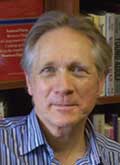 JOE ADAMSON Interview (1-13-05)
 TONY PALMER Interview (1-14-05)
 RUSS REGAN Interview (3-10-05)
 TONY BRAMWELL Interview (4-13-05 and 7-8-05)